Barambah Weeds
2015—2016
Investment: $47,000
Funding body: BMRG through the Qld Regional NRM Investment program
Project purpose: Minimise the spread and impact through control measure of Parthenium and Ruber Vine in the Barambah and Boonara Creek systems.
Key achievements:
-
-
-
-
- Over 750 hectares of riparian land treated for Rubbervine and Parthenium across Barambah and Boonara Creeks.
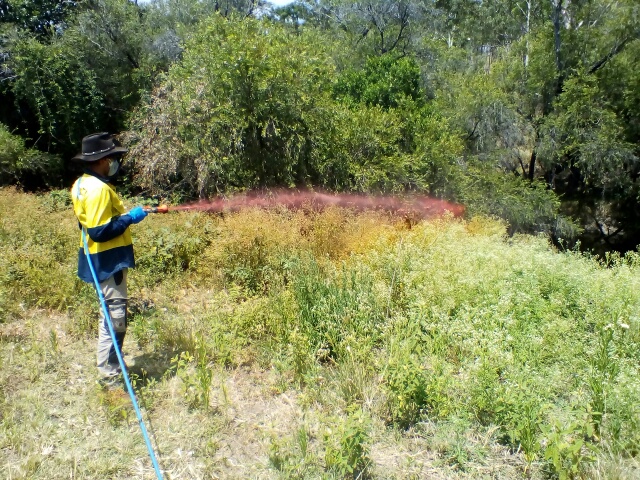
- Targeted control methods applied (to manage dense and difficult-to-access infestations.
- Additional invasive species identified and treated, including Giant Rat’s Tail grass and Mother of Millions.
- Significant weed reduction achieved across 3 major creek systems
-
-
-
The Rubbervine and Parthenium Control in Barambah Creek Project targeted invasive weed infestations across key riparian areas of the Barambah and Boonara Creeks, within both the Gympie and North Burnett Regional Council areas. The project focused on reducing the spread of Rubbervine and Parthenium, two highly invasive weeds that pose a significant threat to riparian health, biodiversity, and agricultural productivity.
In the lower Barambah Creek, control efforts focused on Rubbervine infestations across approximately 7 km of creek frontage, covering 64.6 hectares. Dense infestations and challenging access conditions required flexible control methods, with contractors using both foliar spraying and basal barking depending on terrain and access. During this work, additional invasive species such as Giant Rat’s Tail grass and Mother of Millions were also identified, mapped, and in many cases treated.
In the upper Barambah Creek and along sections of Moonda Waamba Creek and Wild Horse Creek, efforts shifted to Parthenium control. Covering a total of 543 hectares across at least 10 properties, this work required six days of treatment with a two-person team. While Parthenium presence was less abundant than anticipated, the large control area was successfully treated, reducing the risk of spread further downstream.
In the lower Boonara Creek, contractors managed both Rubbervine and Parthenium infestations across an estimated 152.5 hectares (27.5 ha Rubbervine and 125 ha Parthenium). Infestation density varied, with Parthenium dominating the upper sections, while Rubbervine became more prominent further downstream. Due to limited funds, the final 4 km of creek frontage—approximately 45 hectares—could not be completed. This section is believed to be heavily infested with mature Rubbervine and has been flagged as a high priority for urgent treatment in future works.
Overall, the project successfully treated more than 750 hectares of riparian land, protecting waterway health, reducing the spread of invasive weeds, and safeguarding agricultural productivity across the Burnett and Gympie regions.
Program News

Barambah & Boonara Catchment Weed Project
BCCA’s Community Sustainability Action Grant (CSAG) —Invasive Weed Control in the Barambah and Boonara Catchments project had come to completion. The project commenced in 2018 and aimed to monitor and treat infestation levels of Rubber Vine, Parthenium Weed and Honey...
Barambah and Boonara Weeds Project
BCCA in collaboration with Gympie Regional Council (GRC) are well into our 'Community Sustainability Action Grant' project, which aims to monitor current infestation levels of Rubber Vine (RV), Parthenium Weed and Honey Locust (HL) in the Barambah, Boonara Creek and...
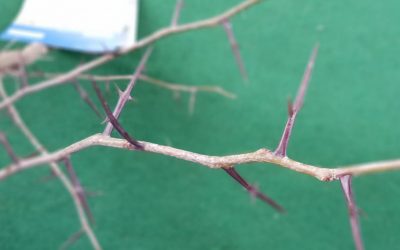
Barambah and Boonara Weed Control Project
In 2018, BCCA successfully obtained a ‘Community Sustainability Action Grant’ to collaborate with Gympie Regional Council (GRC), to monitor current infestation levels of Rubber Vine (RV), Parthenium Weed and Honey Locust (HL) in the Barambah, Boonara Creek and...
Program Sponsors
This project was supported by the following partners and investors.